A relatively new and exciting trend to hit the printing world of personalised T-shirts and garments is All-Over-Printing. Like regular printing, but not limited to one localised area of the Tee, allowing designers to explore the seams, hems and zips like never before.
We know and love DTG, screen and/or transfer printing, and on those occasions we can clearly imagine the stamp of the machine focused on one particular area, suspending the design in negative space. However, in this case, the print extends to the very edges of the garment, filling all the space!
Don’t worry if this is going over your head, we will explain the in’s and out’s of every stitch. Leave it to the professionals, we’ll take care of it for you.
Are you planning an event and need a bulk of full print t-shirts that pack an extra punch from afar? Are you looking for how to impress your clients with a new printing style that has oodles of pazaz for their merchandise? Are you an internet sensation looking to further monetise your phenomenal fame? Are you looking for inspo for a revamped uniform or workwear or promotional garments for an event, etc.? After All, you are a trendsetter, so shouldn’t you already be up in here with this new fad? All-Over print may be what you’re looking for.
A term used to denote a specific technique of garment printing of which covers every inch of the garment. One of the only ways of being able to tell if the fabric was all-over printed is hidden in the seams, the hem, and other elements like the zippers – which wouldn’t be present in regular and more popular types of garment printing approach.
This kind of print is achieved by layering the t-shirt on a flat surface and then printing on top of it, which means that any element that is not exposed to the ink, like hems, for example, won’t be affected.
If a hem or the interior of the garment is printed, then it stands to reason that the fabric was probably printed before it was sewn, this is the traditional and more effective way of all-over printing. However, not to be confused with an “oversized print”! Which is usually achieved by large screens and is meant to surpass the limitations of traditional printing techniques.
To learn more about the most popular techniques head over the best types of T-shirt printing techniques.

In your mind’s eye, does your vision of the garments have a continuous design or one that travels across the fabric infinitely, like a fractal? If so, all-over printing will appear literally seamless! This is what graphic designers call “bleed” when an element is constructed in such a way that it creates the illusion of existing passed the borders of its canvas.
To go into more detail, essentially when a designer approaches a graphic they take caution to include bleed in their work. What is bleed, you may ask? It is the negative space that spreads further than the planned border of the design. Using All Over print the design will have to be trimmed, and the bleed is like the safety net you allow so that the finished product looks how you envisioned! Every printer is unique, with its own kinks and level of precision. To ensure the final graphic makes it onto the final garment entirely, designers tend to allow 2-5mm of excess space either side. In so doing, if the graphic spreads into the “bleed zone” you can avoid a white eyesore outer-fringe by trimming to your preference. Similarly, when you cut the design to its intended dimensions, the inner area can be called the “trim zone”.
When we put artwork on the confines of a t-shirt or garment it tends to be confined to front or back, but with all-over print, it can be, for a lack of a better word, all over the place. It is an eye-catching process that shall create bold statements and an immediate impression.
All-over printing can be achieved through several methods, today we’re going to explore two of the most popular: large-scale screen and sublimation printing.
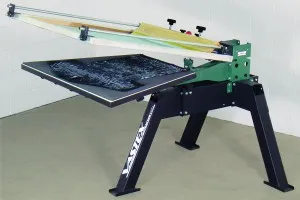
Large-Scale Screen Printing like regular Screen Printing, instead with a whopping huge screen, able to consume the entire garment size of an XL male t-shirt! A popular process that can use any type of fabric and can be practiced by hand or by industrial “belt screen printer” machine.
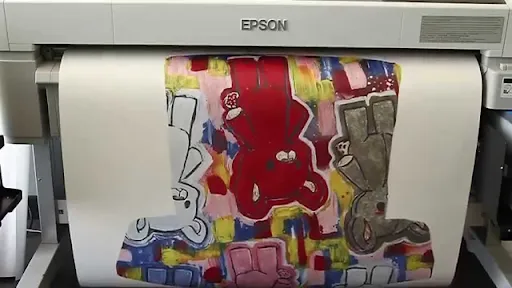
Sublimation printing is a computer printing approach which uses heat to transfer dye onto materials. A commercial heat press is used to transfer the design onto the t-shirt. The dye then becomes a gas without becoming a liquid (sublimates) which is absorbed by the fibres, usually polyester and polymer-coated substrates.
This means the dye is now actually part of the make-up of the fabric, which is why the design doesn’t bleed out in the wash! And better yet, doesn’t fade. The best fabric choice for sublimation printing is either 100% polyester, drirelease (85% polyester and 15% cotton) or 50/50 (50% polyester and 50% cotton). All t-shirts start out as white, the base colour is part of the print.
As a new printing option, all-over printing has opened the doors to all kinds of new possibilities, but it is still in the early stages of development and therefore not free of faults. The most important of them being that any crease or wrinkle the t-shirt might have during the printing process will mess up the print and leave an obvious white spot instead of colour. The person conducting the procedure must be very careful and make sure the t-shirt is perfectly flat at the time of printing, otherwise, the final product may end up looking like a white-spotted Dalmatian.
Human nature is to make art out of the bad. If you consider yourself a trendsetter and this is the first you’ve heard of customised bulk All-Over-Print T-shirts and garments, then where the hell have you been?
Overall, all-over printing is a great choice to have for marketing managers, merch managers, businessmen and the like, who wish to explore their creativity in production. Due to its almost non-existent limitations, the possibilities are almost endless when it comes to its visual prowess.
If you’re looking into adding all-over printed apparel to your stock during this year, or you need a bulk of all-over shirts for your snazzy event in London, we suggest these timeless patterns as examples to inspire you:
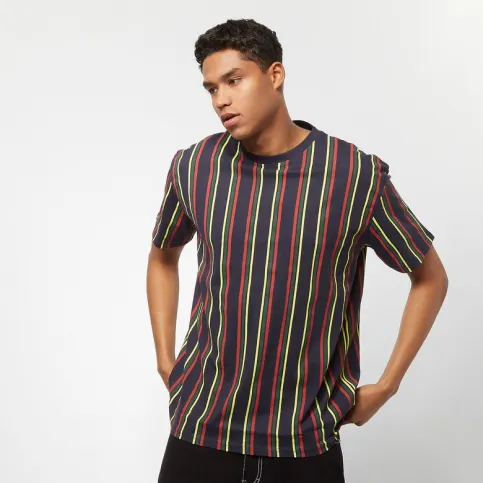
Stripes can bend, zigzag, curl and wave. Stripes can take inspiration from zebra print or geometric form in a myriad of colours! It might be the apocalypse, but stripes will never die. They are always in trend. This vertical alignment above is particularly appropriate for a smart casual college student look. Or switch it up with white and blue horizontal and you have a nautical vibe.
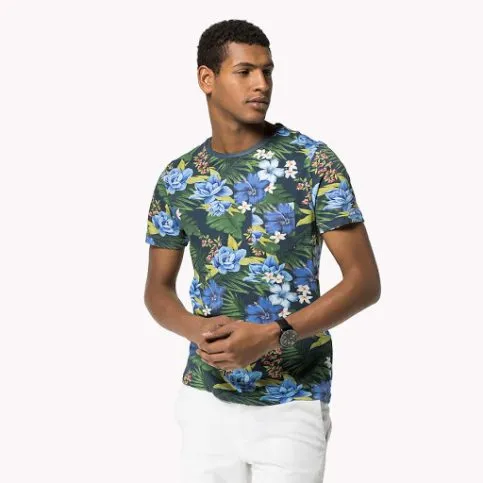
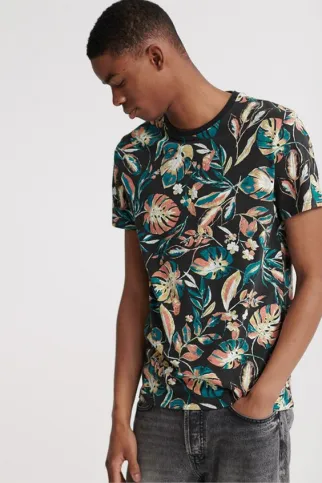
Florals always cycle back, you can guarantee it. They’re always in! Especially during the spring and summer seasons. Even for male clothing. Taking inspiration from nature is immortal. And nothing says “I am comfortable” more than a man with massive floral patterns, with slithers of pink, on his printed t-shirt! Be confident, be comfortable.
Remember colour block? Well, this is the same concept only with patterns rather than colours. Don’t be afraid to clash different types of prints, the results could surprise you! Retro newspaper all-over print is brave and all-over printed childhood cartoons are both iconic and “look at me I’m a fully grown adult, but still in touch with my inner child”. No hesitation. Some ballsy moves.
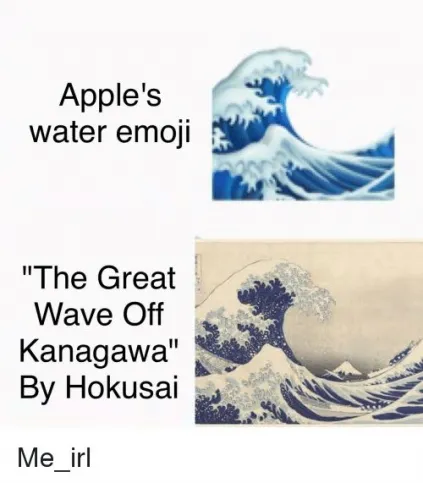
Block printing is not a new art form. Hundreds of years previous, in ancient Japan, many enlightened artists practised the form meticulously. Creating art that has been upcycled and borrowed for modern art and fashion ever since. Art is always informed by what came before it as it continually eats itself and evolves. Above is Hokusai’s famous wave print, which is so famous in fact that there is an emoji designated just for it. You too can print any image using all over print.
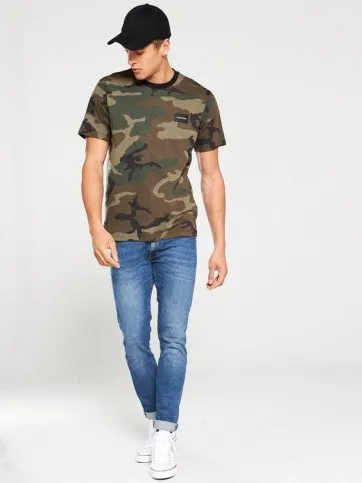
Apologies for the dad-jokes that will follow but, look it’s a guy with an invisible shirt! It’s surprising that with how fashionable camo is, people don’t collide in the streets! Jokes aside, you can’t go wrong with trying to impersonate a veteran. Immensely cool and paying honourable homage to the men and women who fight to protect us.
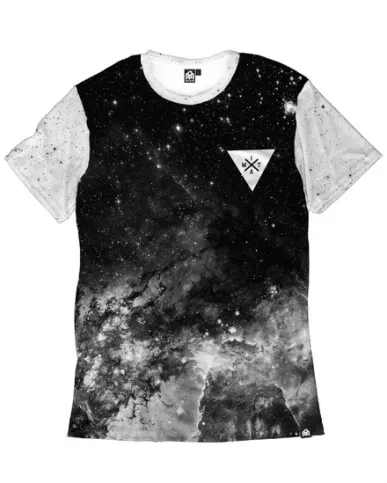
An example of an all-over-print that then uses another fabric for the sleeves and pocket to create bold contrast. Simple yet effective.
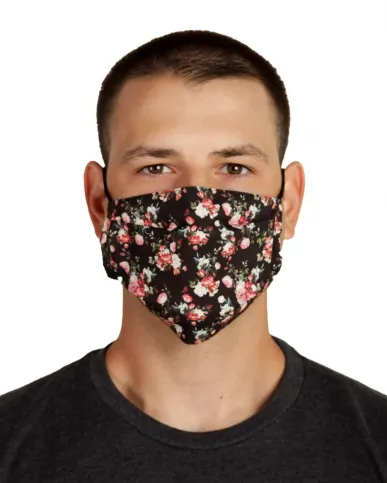
Nothing shows a customer that your company cares than supplying healthcare items. Things such as masks have become something companies want to invest in for quality. Get ahead of the curve and print your branding on a piece of something truly useful!
We’ve learnt what all over print is and how the process works in its two main forms; sublimation and large-scale screen. We’ve explored some advantages and disadvantages of both techniques for full t-shirt print and unearthed some inspo for your moodboard in creating refurbished workwear, or promotional clothing, or any other types of merchandise for your stock – with emphasis on timeless styles. At Printsome, we are the seasoned printing experts for your full print T-shirts or garments’ needs, so you can relax and we take the stress off your shoulders with our trusted hands.
.png)
Happy Customers

Express Service

Star Rating

Quick & friendly custom clothing printers in the UK. From bulk t-shirt printing to corporate workwear, we deliver quality results every time.